
Afghanistan’s Crisis of Educational Recognition
Mohammad Jawed Nazari (PhD Candidate and Education Researcher in International Education, New York University)
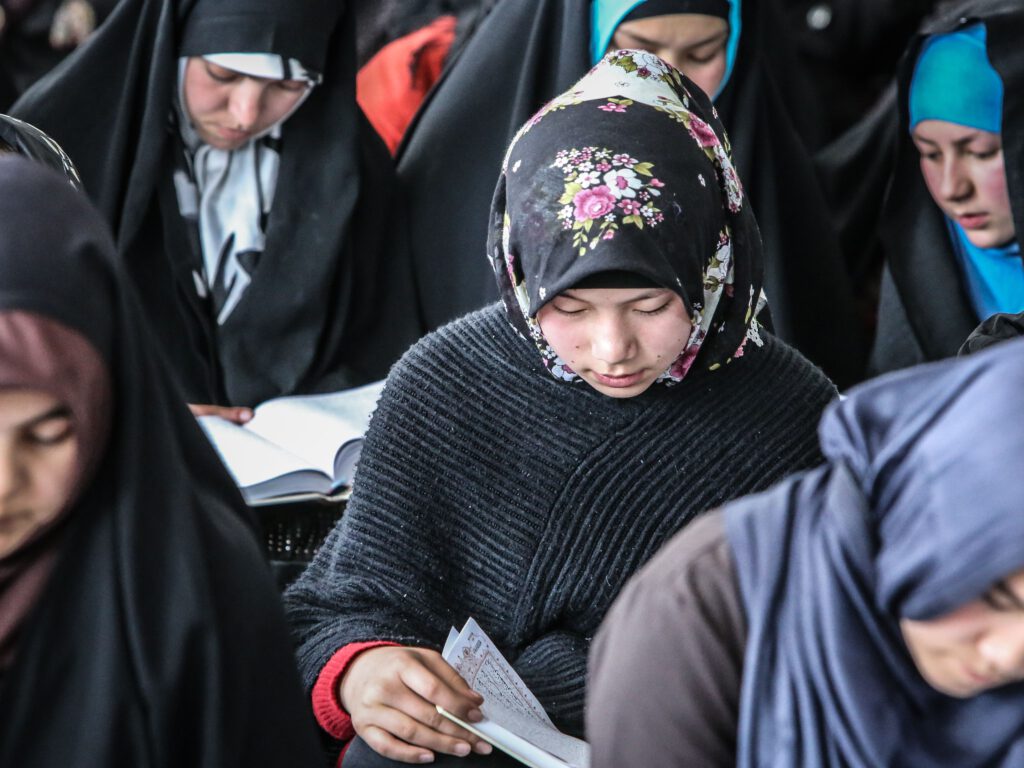
Five years have passed since the Taliban returned to power in Afghanistan, and for millions of girls and women, the passage of time has been severed from the progress of learning. A girl who was in grade seven when her school was closed in August 2021 would be starting her last year of secondary school. A young woman who had just entered university would have already graduated. Instead, they remain at home, their educational sequences frozen and their aspirations suspended in an agonizing limbo.
I write about this crisis as an Afghan education researcher whose life and work have been shaped by Afghanistan’s schools, families, and communities. Over the past decade, my research has taken me across rural and conflict-affected communities in Afghanistan, where I have seen how deeply families value education and how powerfully girls imagine their futures through school. For me, the ban on girls’ education is therefore not an abstract policy issue; it is a lived national wound, visible in the interrupted lives of students, teachers, and families whose futures have been forced into waiting.
On January 24, 2026, marking the International Day of Education, UNESCO and UNICEF issued a joint press release reaffirming that education is a fundamental human right and the indispensable foundation of peace, dignity, and opportunity. Tragically, Afghanistan stands alone globally as the only country in the world where secondary and higher education are strictly and systematically forbidden to girls and women. To date, an estimated 2.2 million adolescent girls have been banned from secondary school classrooms. Yet as devastating as these figures are, they do not fully capture what is being erased. This blog post examines the deep multi-sectoral toll of this educational disruption and explores the urgent challenge of alternative learning. In doing so, it establishes two critical realities: first, that there is no genuine substitute for formal, in-person schooling; and second, that current alternative educational efforts remain fragmented and risk rendering girls’ intellectual growth institutionally invisible. Moving beyond the narrow logistics of lesson delivery, I argue that we must confront a deeper legal and structural crisis: the urgent need for a transnational framework of educational recognition.
A Durable System of Exclusion
The systematic exclusion of girls from formal education unfolded through a sequence of sudden decrees. Following the fall of Kabul on August 15, 2021, girls’ secondary schools failed to reopen in tandem with boys’ schools. In March 2022, a promised reopening for girls above grade six was reversed at the last minute, with officials citing changing justifications regarding uniforms and compliance with their interpretation of Islamic law. The closure was expanded in December 2022, when women were formally suspended from higher education and universities nationwide. These restrictions have been reinforced with broader limits on women’s public participation and employment, including bans and restrictions on women working in many sectors of civil society, public service, humanitarian response, and professional life. While the de facto authorities have frequently characterized these bans as ‘temporary’ or ‘conditional,’ several years of enforced absence have solidified them into a durable, systemic mechanism of gendered exclusion.Formal learning for girls now terminates abruptly at grade six, barring them from secondary school, university, professional training, and public life.
This systematic erasure repeats the gendered exclusions of the first Taliban regime from 1996 to 2001 when girls’ formal education was severely restricted, women were largely excluded from employment and public life, and learning for girls often survived only through hidden or informal arrangements. After 2001, although the rebuilt Afghan education system remained fragile, underfunded, and unequal, monumental progress was made. Women teachers, doctors, lawyers, journalists, and civil servants became visible and active participants in public life. This progress was never complete, but the direction mattered deeply: education had become imaginable for millions of girls and women, and for many families it had become a natural part of everyday life.
The current ban is therefore both old and new. It is old because it repeats historical patterns of gendered exclusion; it is new because it violently interrupts a generation of girls who had already begun to see schooling, exams, university, and professional life as their natural part of their everyday lives.
The Multidimensional Toll of Educational Erasure
To be excluded from education is not just to miss out on lessons. It is to lose a recognized place in a possible life trajectory – a structured procession toward graduation, employment, and public contribution. An education system is a structure that validates that a student’s time matters. It provides the steps of grade completion, examinations, certification, graduation, and professional entry. To claim the identity of ‘student’ is to claim time, space, purpose, and a public future. When that identity is taken away, the harm is academic, emotional, social, and intergenerational.
This cascading damage is also visible in our ongoing qualitative research at New York University, where we examine how the anticipation of the grade-six barrier acts as a psychological ceiling for families and children alike (Burde, et al., 2026). Knowing that formal learning terminates after primary school severely weakens families’ motivation to invest in the early grades, undermining effort and breaking the link between hard work and future opportunity long before the ban formally takes effect. This research insight is starkly reflected in macro-level data: the UNESCO and UNICEF Afghanistan Education Situation Report (2025) reveals that primary school enrollment growth has stalled, leaving over 2.13 million primary-aged children completely out of school and fueling one of the world’s most severe learning crises, in which over 90 percent of ten-year-olds cannot read a simple text. The secondary-school ban, therefore, does not exist in isolation; it actively destabilizes the primary school foundation for younger children.
Ultimately, excluding girls from classrooms represents an active assault on the social fabric, mental well-being, and future viability of the nation. While the de facto authorities have framed these bans as temporary measures required to align schooling with their interpretation of Islamic law and local custom, the compounding consequences reveal a policy that functions in practice as national self-sabotage rather than a neutral administrative decision. These systemic disruptions carry immense costs across academic, socio-emotional, and economic spheres, as documented by international organizations:
- The Academic Cost: The ban on adolescent girls has deepened a broader crisis of ‘schooling without learning.’ With over 2.13 million primary-aged children out of school, more than 90 percent of ten-year-olds in Afghanistan are currently unable to read simple text (UNESCO & UNICEF, 2025). Banning women from universities also prevents them from obtaining degrees. Recent UNESCO and UNICEF research (2026) highlights that student learning outcomes—for both boys and girls—improve significantly in schools where a higher proportion of teachers possess a university education. This exposes a devastating, unspoken vicious circle: the ban on women attending university directly prevents the training of new qualified female teachers. Because policy and cultural restrictions dictate that girls can only be taught by women (especially at the secondary level), and because female teachers are culturally restricted from teaching in boys’ secondary schools, the higher education ban directly starves the girls’ school system of its qualified teachers. Banning women from universities thus creates a self-reinforcing collapse of the entire female educational pipeline.
- The Socio-Emotional Toll: Being excluded from learning because of one’s gender delivers a devastating message of worthlessness, alienation, and exclusion, causing widespread grief, isolation, and anxiety. School represents a vital daily routine and a structure of daily hope. Its disappearance leaves an empty space that often pushes girls into domestic servitude, social isolation, and early marriage. UNICEF has warned that the continuation of the ban severely increases the risk of child marriage and damages girls’ long-term health (UNICEF, 2025).
- The National and Economic Cost: Afghanistan desperately requires female professionals. In a gender-segregated society where many women and girls depend on female health workers for culturally and socially acceptable care, denying girls education today guarantees a severe shortage of female doctors, midwives, and nurses tomorrow. If restrictions continue, Afghanistan is projected to lose up to 20,000 women teachers and 5,400 healthcare workers by 2030 (UNICEF, 2026). This professional shortage directly increases maternal and infant mortality. Economically, these bans are already costing the country an estimated US$84 million annually in lost economic output (UNICEF, 2026), with the suspension of women’s higher education alone projected by UNESCO’s macroeconomic modeling (2025) to cost up to US$9.6 billion in lost potential by 20661—equivalent to two-thirds of the country’s current GDP.
The compounding, multi-sectoral effects of these policies on human capital, public health, and macroeconomic stability are consolidated in the table below, underscoring that the ban is not merely a social restriction, but a policy of national self-sabotage:
| Impact Sector | Projected Loss | Primary Source | Systemic Consequences & Implications |
|---|---|---|---|
| Economic Output (Higher Ed) | US$9.6 Billion | UNESCO (2025) | Projected loss in potential economic output by 2066, representing roughly two-thirds of the nation’s current annual GDP. |
| Economic Output (Secondary Ed) | US$84 Million | UNICEF (2026) | Annual direct cost of restrictions on girls’ education and women’s employment in lost productivity. |
| Teacher Workforce | 20,000 Deficit | UNICEF (2026) | Projected deficit of female teachers by 2030, threatening the entire primary school system for boys and girls. |
| Healthcare Shortage | 5,400 Deficit | UNICEF (2026) | Projected deficit of female doctors, midwives, and community health workers by 2030. |
| Maternal & Infant Mortality | Increased risk of maternal and infant mortality | UNICEF (2026) | Severe shortage of female professionals directly correlates to elevated maternal and infant mortality rates in gender-segregated care. |
Alternative Learning: A Lifeline, Not a Substitute
Across Afghanistan, families, educators, and grassroots organizations have demonstrated heroic agency. They have established community-based classes and courses, underground schools, digital learning platforms, broadcast lessons, WhatsApp tutoring groups, and self-study networks. These efforts matter enormously, providing vital structure, connection, and hope under repressive conditions. Yet, as the ban enters its sixth year, a critical tension has emerged. Many international policy responses have focused heavily on the technical delivery of education through alternative pathways (e.g., delivering lessons via television, radio, WhatsApp groups, online lectures, etc). While these tools keep learning alive, their primary focus on education delivery risks treating these alternatives as quiet, permanent substitutes for the formal right to study.
For a girl studying in her bedroom via WhatsApp, TV/radio broadcast, other educational technology, the question is not just, ‘Can I read this text today?’ Her deeper, structural question is: ‘Will this count? Does this lead to a grade progression? Can I sit for an exam? Will I receive a certificate or recognized credential? Can I use this to apply for a scholarship, enter a university, or practice a profession?’
Without answers to these questions, alternative learning pathways remain highly fragile, individualized, and ultimately invisible. Education is not merely the consumption of content; it is a system of public recognition. A modern education system is a legal-administrative structure that decides whose effort is recorded, whose intellectual growth is certified, and whose future remains legally and institutionally viable. When international actors, donors, and education providers focus only on delivery without structural recognition, they risk creating a parallel, shadow system of education. In this system, girls are encouraged to keep learning under extraordinary constraints, but their accomplishments remain undocumented, uncertified, and legally invisible.
Making Learning Institutionally Visible
The crisis in Afghanistan is not just a humanitarian or development emergency; it is a legal and structural crisis of educational recognition. The issue is not only that we recognize the Taliban’s policy as exclusionary—that is already clear. The harder question is what international institutions, universities, legal scholars, and education actors can do to ensure that girls’ learning under restriction does not remain invisible, uncertified, and unusable for future study or work.
To counter this, I suggest the following. While we must continue to demand the unconditional reopening of schools and universities, we must also build a robust global framework for the legal recognition of alternative learning. This means moving beyond ‘education in emergencies’ funding and toward international legal, academic, and policy innovations, such as:
- Transnational Accreditation and Micro-Credentials: Global university networks, international accrediting bodies, and legal institutions must develop pathways to validate, test, and formally certify the learning that is occurring underground and online in Afghanistan. This ensures that a girl’s intellectual progress is documented, translated into micro-credentials, and held in secure, internationally recognized legal repositories.
- Host Country and University Equivalencies: Universities worldwide must establish flexible admission and credit-transfer frameworks that recognize non-traditional and informal learning records for Afghan female applicants. This actively bridges the gap between underground study and global higher education.
- Feminist Legal Advocacy on Educational Apartheid: Legal scholars should actively advocate for the recognition of gender apartheid as a crime under international law, framing the denial of education and its formal recognition as key components of systematic persecution and the erasure of civil status.
- Safe Re-Entry and Bridge Pathways: Government, universities, and international education providers must create formalized, structured transition pathways and bridge programs that allow girls to seamlessly re-enter formal systems when restrictions are lifted or when they migrate, ensuring their years of alternative study are not legally discarded.
Conclusion: Preserving Educational Futures
The right to education is a hollow promise if the learning acquired is rendered legally dead. Millions of Afghan girls are being told not only that they cannot enter a physical classroom, but that their aspirations, intellect, and hard work no longer have an authorized place in the public future of their nation. The deepest harm of the ban is the Taliban’s attempt to make girls’ efforts, minds, and futures invisible.
The international community’s response must be to defend their educational identities. They must make their learning visible. The right to education is not the right to learn in secret today; it is the fundamental legal right to have that learning recognized and valued. We must ensure that when the doors to Afghanistan’s classrooms finally open again, the generation of girls who studied in the shadows will be legally recognized, certified, and ready to lead.
References
Burde, D., Lahmann, H., Samii, C., Gharibzada, H., Hatsaandh, A. H., & Nazari, M. J. (2026). Expanding access to quality education in Afghanistan [Unpublished research report]. New York University
UNESCO. (2025). Banned from education: A review of the right to education in Afghanistan. UNESCO. https://unesdoc.unesco.org/ark:/48223/pf0000393229_eng
UNESCO & UNICEF. (2026, January 24). UNESCO and UNICEF urge action to protect the right to education in Afghanistan. UNESCO. https://www.unesco.org/en/articles/unesco-and-unicef-urge-action-protect-right-education-afghanistan
UNICEF. (2026, April). The costs of inaction: Girls’ education and women’s labour force participation in Afghanistan[Issue brief]. UNICEF Office of Strategy and Evidence – Innocenti. https://www.unicef.org/innocenti/reports/cost-of-inaction-afghanistan-2026
UNICEF Afghanistan. (2025). Afghanistan education situation report 2025. UNICEF. https://www.unicef.org/afghanistan/documents/afghanistan-education-situation-report-2025
- UNESCO uses 2066 as the endpoint of the model because it is the year when the last woman who had received higher education before the suspension would retire from the labor force. ↩︎