

Bedirhan Erdem (Research Associate at Leuphana Law School, Lüneburg; Ph.D. Candidate at Humboldt University of Berlin)
In October 2025, Turkey’s 11th Judicial “Reform” Draft drew renewed attention to the country (see here). As a member of the Council of Europe since 1949, the Turkish government has been preparing to introduce offences framed around “gender non-conformity” and so-called “immoral sexuality”, measures that would criminalise the mere existence of LGBTI+ people (“penalisation of being LGBTI+”). Recasting criminal law as a tool of moral governance is neither new nor peculiar. Yet a Turkish government initiative this explicit, directly targeting LGBTI+ people through criminalisation, was deeply shocking, especially given that no comparable offence existed even under the Ottoman Empire in the 19th century. Fortunately, the government withdrew the proposed criminal provisions targeting LGBTI+ people from the draft judicial reform act before it was formally submitted to parliament. However, this week the proposal has continued to be supported by state propaganda outlets, government-aligned NGOs, and news agencies. This illustrates a broader and deepening trajectory targeting the LGBTI+ movement in Turkey—ranging from administrative obstruction against LGBTI+ NGOs (often on the basis that their very establishment violates “public morality” under the Law on Associations), to arbitrary prosecutions under obscenity provisions and other public-morality offences—and an ongoing threat to penalise LGBTI+ existence itself.
Nowadays, the persecution of the “May 17 Association” NGO (see here) and its president, Defne Güzel (see here) shows how these distinctive administrative and criminal procedural tools operate in practice. Administrative measures and criminal procedure itself have already become punitive instruments used to expand social control over LGBTIQ+ civil society in Turkey. At a time when global pressure on LGBTI+ communities is rising day by day, as a SAFI member and a scholar of criminal procedure, I feel obliged to take a closer look at this procedural and punitive state machinery.
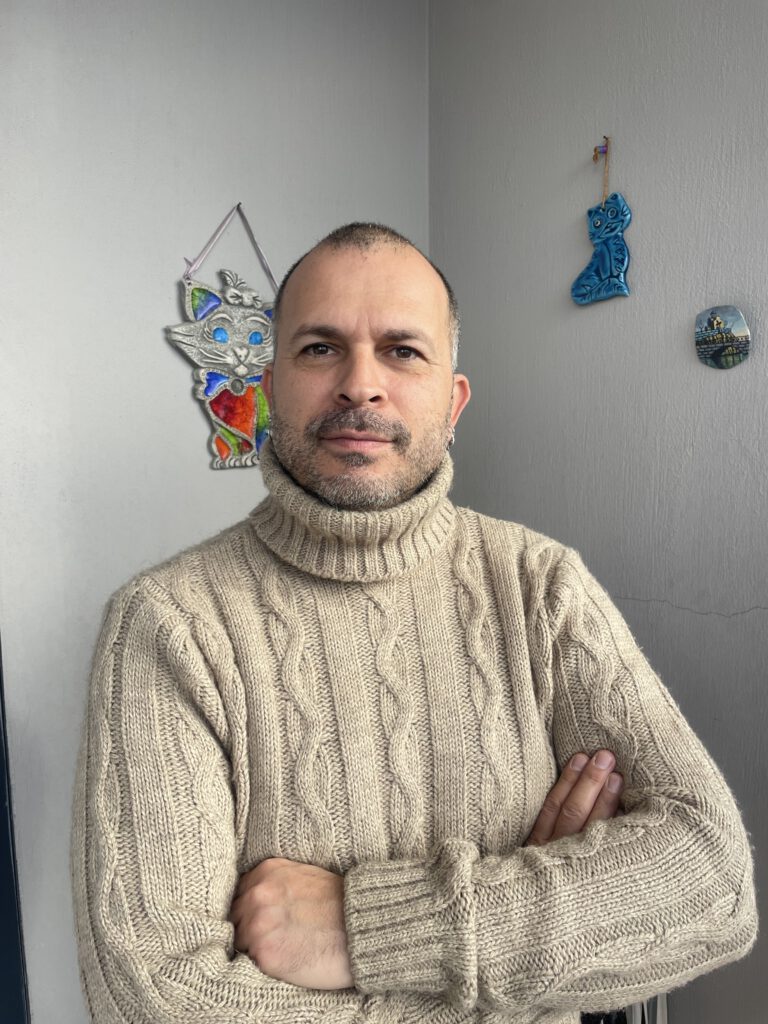
To explore this further, I conducted an interview1 with Kerem Dikmen (see here), an attorney and long-time activist with the well-known LGBTI+ NGO Kaos GL (see here and here), who has also faced prosecution for his activism. The following interview examines the state’s procedural “toolbox” and outlines risk-aware strategies of international academic solidarity.
SAFI: What is the subject matter of the persecution against the May 17 Association?
Kerem Dikmen: The indictment focuses on an exhibition catalogue (see here) published on the Association’s website, a book (see here), and an Instagram post by the Association announcing the book’s publication. The exhibition catalogue features artistic works from a group exhibition; regarding this catalogue, the indictment states that it “contains an image depicting a sexualised image of women.” The book, titled Benim İnterseks Hikayem (“My Intersex Story”), is the Turkish translation of a book containing personal testimonies of intersex people living in Europe. The original version was published by Organisation Intersex International Europe. Regarding the book, the indictment states that “the book, which explicitly includes private matters, while also covering the medical and psychological processes they experienced, is accessible to the public via the Association’s website.” In both instances, the prosecution places particular emphasis on the public accessibility of these materials and, on that basis, characterises the Association’s content (the catalogue and the book) as, beyond its intended purpose, “of a nature that is disruptive to mental, moral, psychological, and social development,” and as offending public morality. One further point should be added: by reference to the hashtag #MyIntersexStory (reached through #BenimInterSeksHikayem), it is also claimed that other social media accounts shared related content and that these posts included images of children; however, there is no evidence in the case file to substantiate this claim.
SAFI: Is this an isolated case, or does it constitute yet another manifestation of an ongoing social control mechanism systematically targeting LGBTI+ rights, in particular the freedom of assembly?
Kerem Dikmen: We cannot characterise this as an isolated case. Even prior to the present proceedings, a criminal case had already been brought against the Genç (“Young”) LGBTI+ Association, based on similar allegations directed at members of its supervisory and executive boards, in relation to its social media posts. This is the second such case. In that sense, the matter has already moved beyond being an isolated incident. This is particularly significant given that, to my knowledge, there are only 13 LGBTI+ associations in Turkey. More importantly, the “official inspections” relied upon in these prosecutions stem from a report prepared following the inspections carried out in September 2024, pursuant to a direct instruction by the Minister of the Interior, during which all LGBTI+ associations in Turkey were audited. In other words, these criminal cases are the outcome of a centralised political decision.
The judicial subject matter of the cases has been summarised above; yet the underlying political motivation lies elsewhere, namely in the steadily shrinking space for civil society in Turkey. There is an apparent state policy that, within that already constrained space, aims to curtail the capacity and ultimately the very existence of LGBTI+ organisations engaged in human rights advocacy. The advocacy dimension is particularly significant in this context. In 2024, LGBTI+ organisations engaged in intensive reporting to international mechanisms such as the United Nations as well as to regional bodies like the Council of Europe. The shadow reports they prepared informed and shaped the questions directed at the state. Reporting activities covered a wide range of monitoring procedures from the International Covenant on Civil and Political Rights and the Convention against Torture to the Universal Periodic Review and various non-periodic calls for contributions. In this light, such criminal and administrative proceedings brought against LGBTI+ organisations bear a retaliatory character.
SAFI: Who is Defne Güzel, and what are the allegations brought against her?
Kerem Dikmen: Defne Güzel is a well-known trans activist working in the fields of LGBTI+ rights and HIV+ advocacy. She also serves as a human rights expert and advocacy coordinator within the Human Rights Programme at Kaos GL. The allegation directed against her is that she acted in breach of Article 32(p) of the Law on Associations (Dernekler Kanunu). In this context, the indictment also invokes Article 30(b) of the same law, referring to the notion of “establishing prohibited associations.” Article 30(b) states that it is prohibited to establish an association for purposes explicitly banned by the Constitution or by law, or for the purpose of carrying out acts constituting a criminal offence. Although not expressly stated, the references in the indictment to “family” and “children” suggest that the Association is implicitly deemed to pursue aims allegedly contrary to Article 41 of the Constitution, which concerns the protection of the family and the child. In this way, the case reflects a concrete manifestation of a broader state policy directed against LGBTI+ organisations, politically framed, for instance, under the banner of the “Year of the Family (Aile Yılı)”.
SAFI: As a lawyer, do you identify any procedural violations or legal irregularities in relation to Defne’s indictment, the evidence relied upon by the prosecution, and the overall conduct of the pre-trial investigation?
Kerem Dikmen: First, the social media posts made by other, unrelated social media users who used the same hashtag as the Association are relied upon as evidence in the allegations against Defne Güzel. This amounts to holding a person criminally responsible for the acts of others, which is an obvious infringement against the principle of individual criminal responsibility. It is particularly striking that the book Benim İnterseks Hikayem (“My Intersex Story”) has been made the subject of criminal accusation. The publication contains no reference to sexual, romantic, erotic, or emotional interaction. Rather, it recounts the lived experiences and personal testimonies of intersex individuals—referred to as hünsa in Ottoman Turkish— demonstrating that intersex existence has long been recognised and conceptually embedded in the linguistic and historical traditions of these lands. Moreover, the state itself officially collects data concerning intersex births. Against this background, turning such a publication into the object of criminal prosecution effectively amounts to placing a form of existence under criminal suspicion.
Given that the Turkish Constitution guarantees the free development of one’s personality (right to physical, psychological or moral integrity), what is at stake here is the exercise of a constitutionally protected right as the basis for criminal proceedings. There is, in fact, no concrete unlawful act identified at all. Without a criminal act, there can be no offence; this runs counter to fundamental principles of criminal law, including nullum crimen sine lege. Indeed, the indictment against Defne does not even identify a concrete act.
The same applies to the exhibition catalogue: the indictment refers to an image of a vulva; however, this image is an artistic drawing and constitutes a form of artistic expression. The indictment does not explain which specific legal norm is allegedly violated. It does not characterise the image as “obscene,” presumably because qualifying an artistic production as obscenity would be considerably more difficult under the statutory definition set out in the Penal Code. In short, there is no clear legal qualification of any unlawful conduct; instead, the mere presence of this artistic work on the Association’s website is treated as sufficient for criminal accusation. Taken as a whole, this is a case about freedom of expression, and since the expression occurred within the context of an association’s activities, it is simultaneously a case concerning freedom of association.
SAFI: Legal scholars often speak of “punishment without trial.” Yet under increasing autocratic legalism, the proceedings themselves can become punitive, a form of “procedure as punishment.” Do the May 17 Association case and Defne’s case fit this framework? More broadly, what role do vague notions such as “public morality” and “obscenity” play in these files?
Kerem Dikmen: Here it is necessary to look at the provisions of the Law on Associations governing inspections. As a rule, associations classified as “high-risk” are subject to annual inspections. Associations engaged in human rights advocacy are categorised as “high risk,” as we understand from information provided by the General Directorate of Civil Society Relations at events in which we participated. At these events, participants were informed about the authorities’ practice of classifying human rights organisations as “high risk.” In practice, this classification enables ministerial inspections to be conducted without a substantiated and judicially reviewable purpose or without reasonable suspicion. Such inspections, both before and after they are carried out, often render associations effectively unable to function. They therefore operate as a de facto interference and produce a chilling effect, as associations remain under the constant threat of potential criminal proceedings. Each inspection is, in substance, an administrative procedural tool, and our concrete example demonstrates that it can lead directly to criminal proceedings. In that sense, such inspections have features analogous to criminal investigations, at least in terms of their effects, because inspector reports prepared because of these inspections and forwarded to public prosecutors’ offices can trigger criminal prosecutions. In other words, the constant threat of investigation, the state’s unwillingness to share the outcomes of such inspections with the associations concerned, and non-specific allegations, as in the present example, transform the inspection process itself, and its outcomes, into a form of punishment. Associations are pushed into a constant defensive posture; self-censorship emerges; administrative teams remain on continuous alert, searching for deficiencies and vulnerabilities; and significant time, labour, and sometimes money is spent on risk analyses.
At the same time, concepts such as “obscenity”, “public morality”, and the concepts invoked through references to Art. 41 of the Constitution are not primarily legal concepts, but largely political ones. There is a deliberate vagueness at play. This is even more apparent in the criminal case against the Genç (“Young”) LGBTI+ Association. There, a social media post made by the association in 2019 became the subject of criminal prosecution only after the Turkish Directorate General for Relations with Civil Society sent its 2024 inspection report to the public prosecutor. Yet the same Directorate had inspected the association already in 2021, and had not identified any problem with its content then. Here, this deliberate vagueness undermines legal certainty and foreseeability. Ultimately, when these criminal proceedings are assessed together with the administrative inspection processes that give rise to them, what emerges is not merely a suspension of the rule of law, but rather its instrumentalization in bad faith as a technique of governance. Legal mechanisms are instrumentalized to pursue a political agenda by exhausting and weakening LGBTI+ organising capacity and ultimately seeking to eliminate it.
SAFI: Is the state’s current anti-LGBTI+ agenda broadly accepted within Turkish society and academia? How did public and academic actors respond to attempts to penalise “being LGBTI+”? What propaganda strategies are being used to build consent?
Kerem Dikmen: I cannot speak on behalf of “academia” as such. Given the erosion that has taken place in almost every sphere in Turkey, academia has inevitably been affected as well. In that sense, one could respond to this question by first asking: which academia? In an academic environment where dissertation topics and even thesis titles are censored, where academics are provided with lists of “prohibited words,” where even graduation ceremonies are conducted with near-military discipline in order to suppress freedom of expression, and where inclusion in internationally recognised citation indexes is not treated as a genuine priority, even if [the anti-LGBTI+ agenda] appears to be “accepted,” this should not be given too much weight. Yet even within this deteriorated environment, we still observe that among scholars with serious academic ambition (in a positive sense), such policies do not command broader acceptance, and this indicates that gulfs between academia and civil society still exist. At the same time, where freedom of expression is absent, academics’ reactions are often constrained by existential concerns. The case of the Academics for Peace (Barış İçin Akademisyenler) (see here) illustrates this clearly: despite the Constitutional Court’s judgment in their favor, many members have still largely been unable to return to their academic positions after being expelled for exercising their freedom of expression. These realities must be taken into account when assessing “academic reactions.”
As for society, there is clearly an effort to persuade the public to accept these policies. This should not be viewed as a single isolated act, but rather as a comprehensive policy. We observe the use of a wide range of instruments being mobilised for anti-LGBTI+ propaganda, including school curricula, RTÜK (the High Council for Radio and Television) censorship, decisions affecting mainstream media content, and various restrictions on social media. There is also a political economy behind this process that resembles a form of wealth transfer. For example, it is widely reported that substantial public funds were allocated to an international documentary titled Gökkuşağı Faşizmi (“Rainbow Fascism”), commissioned by the state broadcaster TRT (“Turkish Radio and Television”) for anti-LGBTI+ propaganda; also that the Ministry of Family continues to conduct training programmes across Turkey and abroad, in countries such as Germany, where large Turkish diaspora communities reside, thereby extending anti-LGBTI+ rhetoric onto the global stage. The costs of these initiatives form part of the political economy of “persuasion.” But are they succeeding in convincing society? In my view, they are not. Despite extensive public service announcements, organised invitations, events held in some of Istanbul’s most conservative districts, transportation of participants by bus, and the addition of concerts and free catering, the number of participants in hate rallies has never reached even one-tenth of those who join banned Pride marches. A state that claims a lack of resources to provide soap in primary school bathrooms, and that fails to prevent preventable deaths of newborns in public hospitals financed by taxpayers, is at the same time investing heavily in this agenda. In that sense, the policy has something of a contortionist quality to it.
SAFI: SAFI is an international feminist academic network based in Germany. What can international academic networks do to support the LGBTI+ community in Turkey, which is currently under administrative, criminal, and informal pressure? Conversely, what should they avoid doing, or what might unintentionally increase risks?
Kerem Dikmen: Whether SAFI or other academic networks are based in Germany or in other democratic countries, I believe that whatever they do in support of LGBTI+ rights in Turkey is, in a sense, also something they are doing for themselves, particularly in the European context. The campaign we are witnessing in Turkey cannot be separated from a global anti-LGBTI+ movement. What we are witnessing today is the flourishing of repressive, conservative populist leaderships across the globe—leaderships that only a decade ago did not exert this level of influence over our daily lives. For that reason, objections raised against repression in any part of the world also amount to objections against repression occurring, or likely to occur, where we ourselves live. In my view, the most important task is to consistently expose this global climate of pressure everywhere, and to make visible the organic and inorganic connections between the climates of repression across different geographies. As in other spheres, every voice raised within academia regarding human rights violations in Turkey strengthens human rights defenders on the ground.
- The interview was conducted in Turkish (in writing) and translated into English by the author. ↩︎